

It ain’t what you know, it’s who you know.
Or something.
Effective stakeholder engagement is a critical element of strategic communications, but so many organisations struggle to move beyond reactive and unplanned interactions.
They are, basically, winging it.
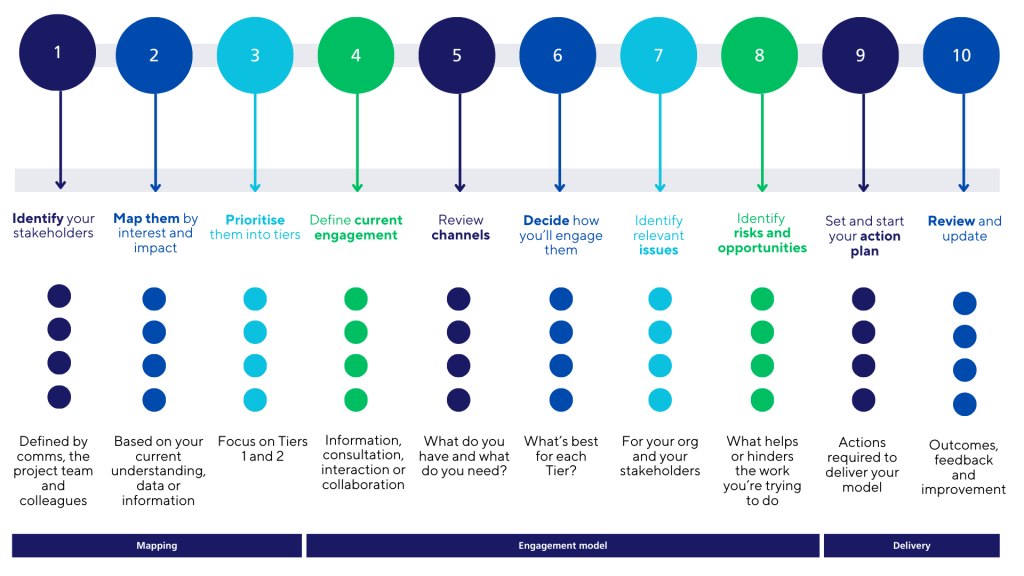
The Clearview Stakeholder Engagement Pathway provides a structured, step-by-step process to ensure that engagement efforts are purposeful, targeted, and adaptable.
Last week Clearview held the first in its series of Masterclasses exploring the most essentials of strategic communications.
Attendees said this pathway was extremely helpful in assessing where they are and where they’d like to be.
So I’m sharing it here, for free.
Why a structured stakeholder engagement pathway is essential
Stakeholder engagement is more than just informing or consulting; it is about building meaningful relationships that drive shared value.
According to the Chartered Institute of Public Relations (CIPR), engagement must be systematic, transparent, and aligned with organisational objectives to be effective.
Without a clear pathway, organisations risk fragmented communication, disengagement, and missed opportunities to influence decision-making.
The Clearview Stakeholder Engagement Pathway helps address these challenges by offering a structured framework for planning, executing, and evaluating stakeholder engagement efforts.
Take it step-by-step
The pathway consists of ten steps, ensuring that engagement is strategic and outcomes-focused.
- Identify your stakeholders – Understand who your stakeholders are, including internal and external groups who may influence or be affected by your work.
- Map them by interest and impact – Use stakeholder mapping tools such as Mendelow’s Matrix to categorise stakeholders based on their level of influence and interest.
- Analyse and prioritise – Focus your efforts by grouping stakeholders into Tiers 1 (high priority), 2 (medium priority), and 3 (low priority).
- Define current engagement – Assess existing relationships and communication channels to determine gaps or areas for improvement.
- Review channels – Identify the most effective ways to engage different stakeholder groups, whether through direct meetings, online platforms, or community forums.
- Decide how you’ll engage them – Define the level of engagement required (e.g., information-sharing, consultation, collaboration, or co-creation).
- Identify relevant issues – Determine the topics that matter most to your stakeholders and align engagement efforts accordingly.
- Identify risks and opportunities – Recognise potential barriers to engagement and areas where collaboration can drive positive outcomes.
- Set and start your action plan – Develop a clear, time-bound plan detailing engagement activities, responsibilities, and success measures.
- Review and update – Regularly review engagement efforts, gather feedback, and refine strategies to ensure continuous improvement.
Best practice approaches to stakeholder engagement
Several established industry bodies provide valuable frameworks for stakeholder engagement:
- Chartered Institute of Public Relations (CIPR): Offers guidance on aligning stakeholder engagement with organisational objectives, ensuring transparency and strategic focus (CIPR).
- International Finance Corporation (IFC): Provides a stakeholder engagement handbook detailing best practices for engaging external groups effectively, focusing on structured, long-term engagement strategies (IFC).
- Association for Project Management (APM): Highlights ten key principles of stakeholder engagement, with a strong emphasis on communication, consultation, and trust-building (APM).
These resources offer practical frameworks and insights that align closely with the Clearview stakeholder engagement pathway, ensuring organisations adopt best practices while tailoring their approach to their unique needs.
A model for long-term stakeholder relationships
My former employer, Isle of Wight NHS Trust was rated Inadequate by the Care Quality Commission for the quality of its care and by NHS Improvement for its finances back in 2017/18. By 2020 it was out of special measures and rated Good overall.
It did this in large part by focusing on staff engagement and working with the public and its partners in a planned, structured and proactive way.
This improvement, linking communications and engagement to organisational objectives, laid the foundation for a strategic partnership with a larger NHS organisation and sustainable healthcare for the Isle of Wight.
Moving from engagement to impact
The Clearview pathway provides a structured, adaptable approach to engagement that ensures organisations prioritise the right stakeholders, use the best engagement methods, and achieve meaningful outcomes.
By aligning with industry best practice and continuously evaluating engagement efforts, organisations can build lasting, mutually beneficial relationships with their stakeholders.
Refine your stakeholder engagement strategy
Start by assessing where you are on the pathway and developing a targeted plan that aligns with your organisational objectives.
Get in touch if you have any feedback, questions or would like some extra help.
 Clearview Communications