

Stakeholder engagement is the difference between telling people something and having a genuine two-way conversation.
It’s harder than it sounds though. It involves working out who your stakeholders are, how interested they are, what impact they might have, how to reach them and then crucially, listening to and acting on what they say.
What is stakeholder engagement and why does it matter?
Let’s keep this simple. Stakeholder engagement is a process that helps organisations listen to, work with and inform people.
High performing organisations are proactive. They seek out the views of people with a stake in their work. This helps improve the work and it builds trust.
It will also bring ideas, knowledge and experience into your organisation.
It is essential to engage with stakeholders when developing your organisation’s strategy or planning business objectives.
What even is a stakeholder?
Stakeholders (sometimes known as audiences or publics) are individuals or groups of people with specific desires and needs from an organisation.
A stakeholder is anyone who has a stake in your organisation. They will have different levels of interest and potential impact on your work.
Examples might include:
- Staff groups
- Board members
- volunteers
- and partner organisations.
Mapping your stakeholders properly
Mapping, or plotting, your stakeholders means you can develop a plan to engage with each group in a way that works best for them. It means that your organisation can make the best use of time and resources too, by putting the most effort into those stakeholders with the highest level of interest and the greatest potential impact.
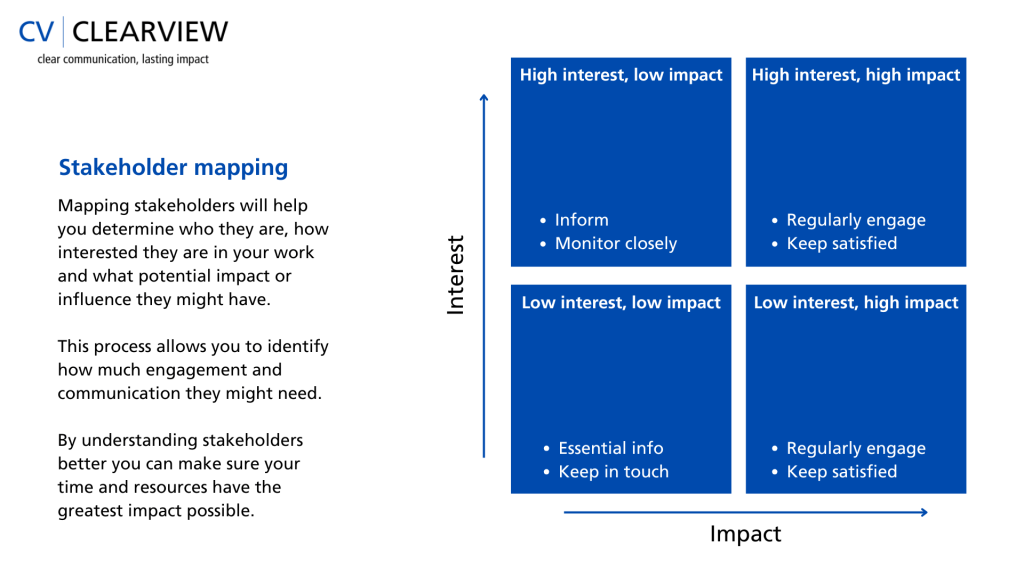
You can use digital software, like Miro or Microsoft Teams whiteboard to brainstorm this step if your team works remotely.
Focus on the four categories set out in the model above.
Low interest, low impact
For stakeholders in this group, one way communication of essential information is probably enough. Make sure to review your stakeholder mapping regularly though, things change quickly.
Low interest, high impact
This group is more influential and could have more of an impact (good or bad) on your work. Make sure to monitor this group, they may not be interested now but keep them informed and consider what questions they might ask in future.
High interest, low impact
They may not be as influential as some other stakeholders but you shouldn’t overlook them. Consider regular engagement, two-way conversations and showing how their input has been received – this will likely keep them satisfied.
High interest, high impact
These are your Tier 1 or VIP stakeholders. This group is where you should focus the majority of your time and resources to ensure effective engagement.
What next?
If you’re working through your stakeholders, the chances are that you will be developing a communications and engagement strategy.
Download Clearview’s Ultimate Guide to Crafting a Communications and Engagement Strategy here.
Facilitated strategic planning can be a massive boost when you’re working through a new communications and engagement strategy.
Book a discovery call with Clearview today and find out how our team of experts can help you.
 Clearview Communications